
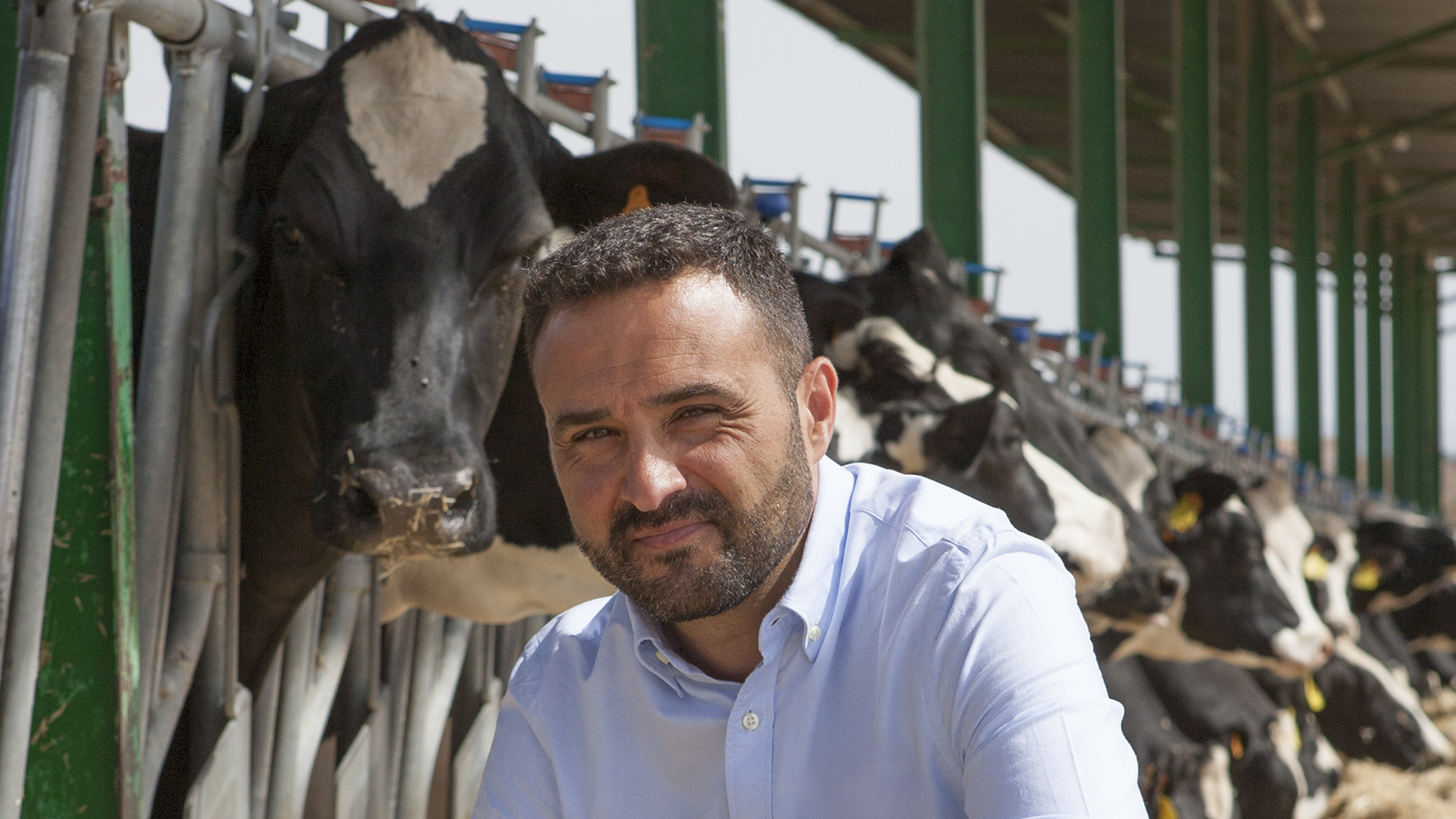
How animal welfare has evolved in the dairy sector: the experience of Calidad Pascual
"Welfair® expands the traditional concept of quality. It is no longer limited to just the final product, but also incorporates how it is produced and how the animals are cared for."
For years, animal welfare was associated almost exclusively with the technical or veterinary field. However, in the last decade, it has come to occupy an increasingly visible place within the food chain. Consumers, distributors, and producers have begun to pay more attention to how animals live, how those conditions are assessed, and what role all of this plays in food production.
In the dairy sector, this evolution has also transformed the way many farms and companies operate. The incorporation of protocols, audits, and external evaluation systems has allowed for the professionalization of aspects related to animal handling, health, and comfort.
In this context lies the experience of Calidad Pascual, one of the first companies to commit to working with certification. Welfair® since 2018. We spoke with Félix Díez Fariza, Animal Welfare Manager and Head of Dairy Business – Agro Purchasing in Pascual Quality.
To begin with, what does having the certification mean for Pascual? Welfair®?
For Pascual, having the certification Welfair® This means reinforcing animal welfare as an essential pillar of our production model, alongside sustainability and quality. It's not just about meeting requirements, but about working with scientific, measurable, and audited criteria. Furthermore, it certifies an effort we make together with farmers, whom we support with advice and resources to continue improving. It's not just about complying with European regulations and legislation, but Go further, seeking continuous improvement together with the farmers.
At what point did the decision to move in this direction arise, and what drove it?
The decision is based on two clear factors: greater social awareness of animal welfare and an internal commitment to more responsible, sustainable, and transparent production models. Welfair® allowed us to give visibility and validate a piece of work which we have been doing for years with livestock farmers. At Pascual, we have been working on animal welfare for over 20 years and, since our first certification in 2018, We have professionalized the process with a specific work module, an advisory guide for farms and the digitization of audits.
“The incorporation of external audits and standards has changed the way many farms work.”
Represents Welfair® within the way Pascual understands quality today?
Welfair® expands the traditional concept of quality. It is no longer limited solely to the final product, but It also includes how it is produced and how the animals are cared for. In that sense, it helps to frame and give visibility to a standard of requirement that Pascual has always considered an inseparable part of its way of understanding milk and dairy products.
“Innovation has a direct impact on milk quality.”
Innovation is often associated with products or technology. Why do you think it should also be viewed through the lens of animal welfare?
Because innovation isn't just about launching products or applying technology, but also about improving production models. In animal welfare, Innovation translates into better processes, better monitoring, and better conditions for the cows. Technology helps us to better care for aspects such as their health, rest, and nutrition, and that has a direct impact on the quality of the milk.
“The certification Welfair® allows us to identify opportunities, raise the bar, and maintain a real dynamic of evolution.”
How does this certification fit into the company's vision of innovation and continuous improvement?
La certification Welfair® It requires periodic evaluations and criteria based on scientific evidence, which It drives constant improvement. It allows us to identify opportunities, raise the bar, and maintain a genuine dynamic of evolution. In that sense, it's another step toward continued growth and not resting on our laurels.
What changes, in practice, when a company decides to submit to a standard like Welfair®?
It involves real changes in daily management: external on-farm assessments, implementation of specific protocols, training and awareness-raising for farmers, and objective measurement of indicators such as health, behavior, and comfort. More than just a formality, It involves organizing and elevating daily practice. to guarantee demanding standards in the treatment of animals and in the care of raw materials.
“Animal welfare is now part of how the sector understands food quality today.”
What value does it bring to have animal welfare endorsed by external, objective and verifiable criteria?
It lends credibility and objectivity. It allows for the measurement, quantification, and standardization, using common criteria, of an area in which the company has been working for years. Furthermore, being audited by independent entities reinforces transparency and builds trust among consumers, distributors, farmers, and other stakeholders by demonstrating, through concrete actions, a real, measurable, and verifiable commitment to animal welfare.
“Consumers increasingly want to understand what’s behind the food they eat.”
To what extent do certifications such as WelfairDo these products respond to a growing consumer demand for transparency and knowledge?
Increasingly, consumers want to know where products come from, how they are produced, and what impact they have. They no longer value only the final product, but also the values, commitment, and responsibility behind it. In this context, Welfair® offers verified and reliable information on animal welfare, helping to clearly and transparently convey the commitment of companies and strengthening trust throughout the food chain.